
Ready, set, go! Here are some tips to help P3 & P4 students ace their English in 2022!
The Primary 3 and 4 years are essential in building a strong grammatical foundation. Ideally, students should have begun this journey in their P3 year with consistent practice in grammar exercises and writing practices. However, students in the Primary 4 year are still able to catch up by paying close attention to their grammar this year. Those who have had their CAs or WAs are able to tell which areas they are weak at and start working on those areas with their tutors or with their parents at home.
As our P3s and P4s write on a weekly basis, we are able to identify and correct sentence structures and grammatical mistakes consistently. So, how can parents help their children at home in a fun way?
How to improve with sentence structures?
Most students do not have problems with simple sentence structures. The confusion begins when the student adds modifiers to the sentences. A modifier adds details to a sentence. For example, adding adjectives or adverbs to a sentence to describe a noun or pronoun in more detail.
In Primary 3 & 4, grammar tests or exercises are usually in the form of multiple-choice questions or underlining the correct answer. If a student does not write compositions regularly in school, parents rarely see how adept their children are in their sentence structures until Primary 5. That is when they begin to write emails and longer compositions that require the use of more modifiers and subordinate conjunctions etc.
How you can help your child at home?
At home, parents can test their children on sentence structures by playing a simple game. Prepare cards with Nouns, Pronouns, Verbs, Adjectives, Adverbs, Conjunctions, and Prepositions.
Assign a color for each. For example, Nouns can be blue, Pronouns can be green.
Depending on the level of the child, he or she can form sentences using the cards. Parents can award 1 point for simple sentences with a subject and a verb, 2 points for a sentence with an adjective or adverb, and 3 points for a sentence with a conjunction. Parents can then offer a reward when the child has reached a certain number of points.
How to improve with tenses?
In Primary 3 & Primary 4, many students still make mistakes in their tenses. This should be nipped in the bud before they reach Primary 5. We consistently correct our students’ tense mistakes in these two years and remind them to build good habits when writing by checking their tenses.
Practising Multiple-choice questions is also a great way for students to learn from their mistake and practice consistently their tenses.
How can you help your child at home?
There are some fun ways to practice tenses with your child at home. Focus on irregular verbs as they are the more difficult ones for children to remember.
Make it a card game just like Snap and select irregular verbs that your child do not know. Create one deck of cards for verbs in the present tense and one for verbs in the past tense.
Keep the decks of cards separated and shuffle each well. The game is played like Snap.
Turn the top card on the present tense deck (black and white cards) over so each player can read it. Leave it face up.
Now begin turning the colored (past tense) cards over one at a time, forming a pile. The player has to spot the past tense version (e.g. left) of the present tense verb (e.g. leave) and slap the card first to win the game.
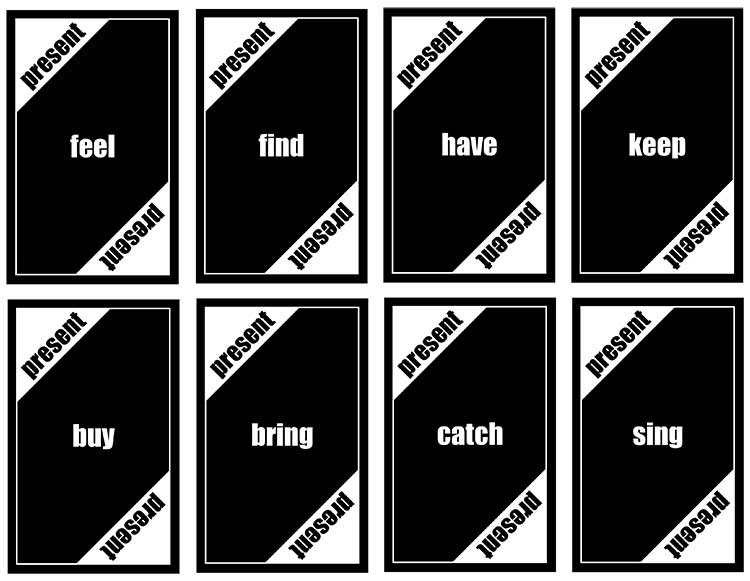
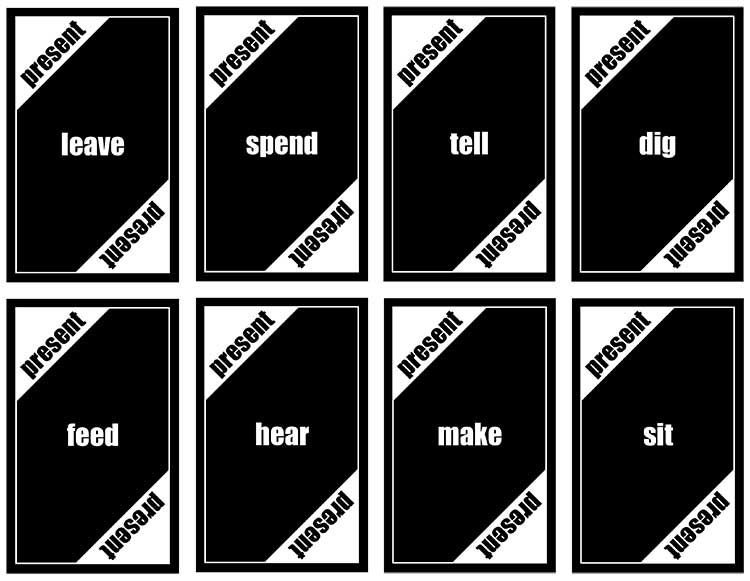
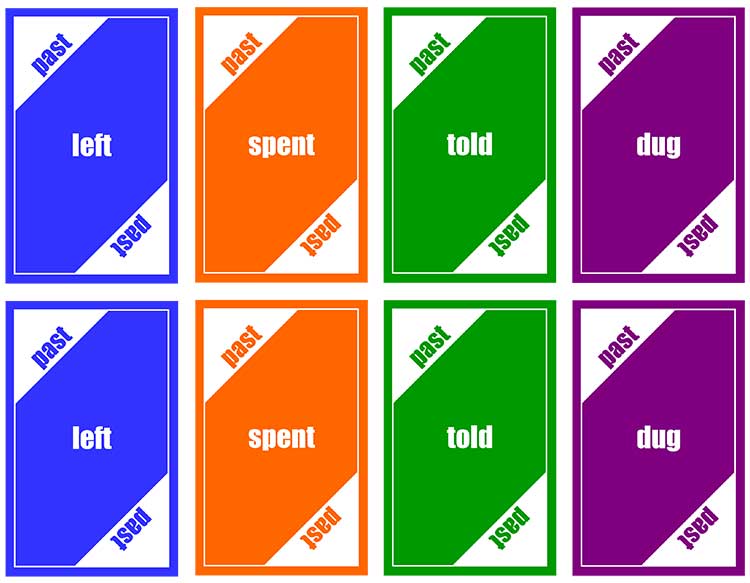
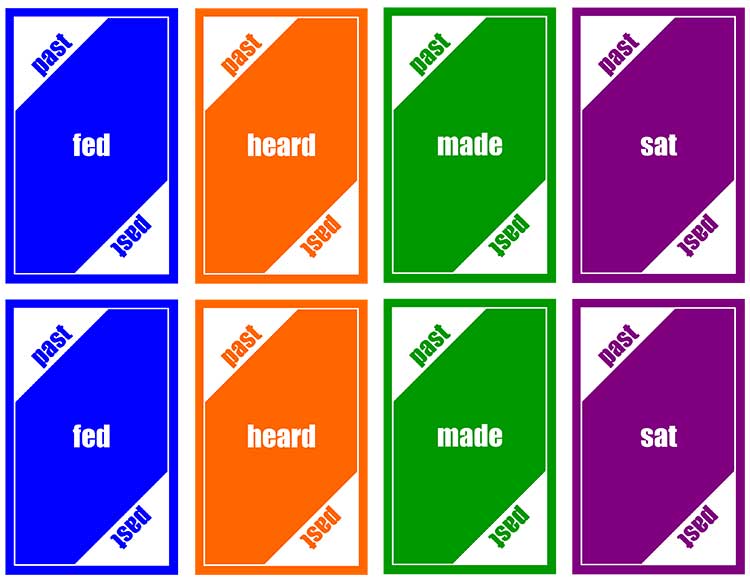
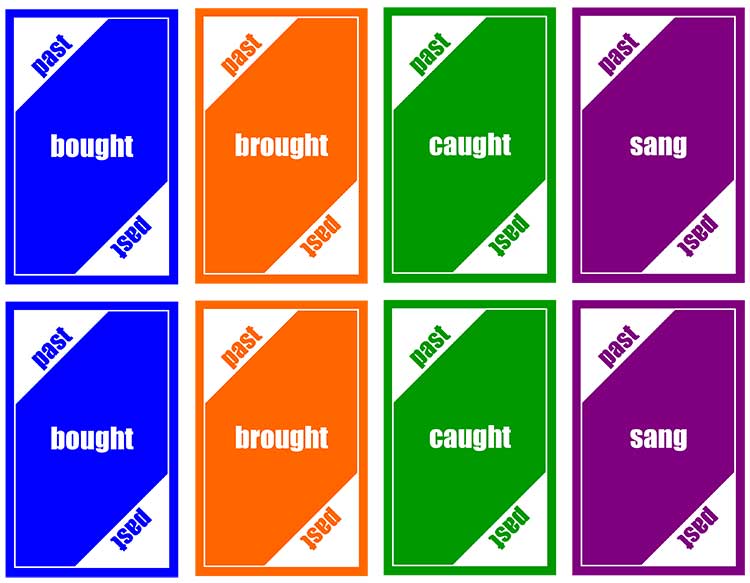
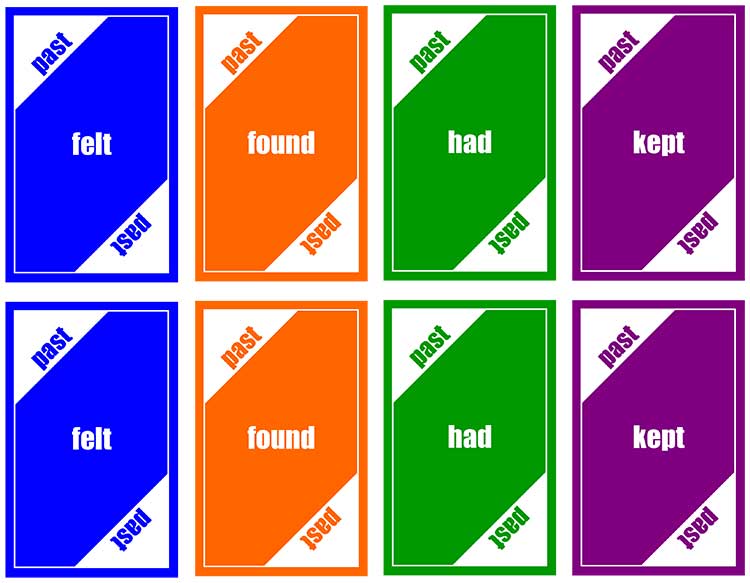
You can download the PDF version of the cards from this blog or feel free to create your own with more irregular verbs.
Check the other articles from this section
- P4 English Grammar – Prepositions of Time
- Primary 4 English Vocabulary List
- SA2 English Revision: 4 steps to tackle Grammar Cloze for Primary 4
- P4 list of Commonly Misspelled Words
- P4 Vocabulary Lists & Exercises
- Primary 4 SA1 Vocabulary List 2016
- P4 Vocabulary List SA1 papers – 2017
- P4 English: 4 common Synthesis and Transformation questions
- How to use Unless in Synthesis & Transformation
- Primary 4 English: Cloze Passage
Don’t Miss Any Future Post!
2024 P4 English Tuition Timetable
| Branch | Day | Time |
|---|---|---|
| Bukit Timah | WED | 3.30 pm to 5.30 pm |
| Bukit Timah | FRI | 3 pm to 5 pm |
| Bukit Timah | SAT | 9 am to 11 am |
| Hougang | TUE | 3.30 pm to 5.30 pm |
| Hougang | SAT | 3.30 pm to 5.30 pm |
